Re: Beer Nerds - I Need Your Help
Posted: Thu Nov 29, 2012 8:47 am
Heineken? Seriously? In the lowlands people generally mock that beer (though grolsch is even worse).

worldwide dubstep community
https://www.dubstepforum.com/forum/


Fruli is kind of nice of a cheeky half pint, but any more than that is too much for meRönin wrote:
If you like fruity beers


 , but as I said, the taste is completely different, comparable to desperados or a less sour variant of geuze.
i like the odd pint of fruli now and again. fills you upmurky21 wrote:so what are you going for bruh bruh? are any of our suggestions successful ?
Fruli is kind of nice of a cheeky half pint, but any more than that is too much for meRönin wrote:
If you like fruity beers
Laaaverlybaron_von_carlton wrote:


Delirium Nocturnum is also good - similar strength but darker and richer.wolf89 wrote:It's well nice.joeki wrote:
8,5% , 12$ for a four-pack.
$12 is really expensive compared to what you pay for it in Belgium


npr.org wrote:
A Sign From Above? Needing New Roof, Monks Sell Rare Beer In U.S.
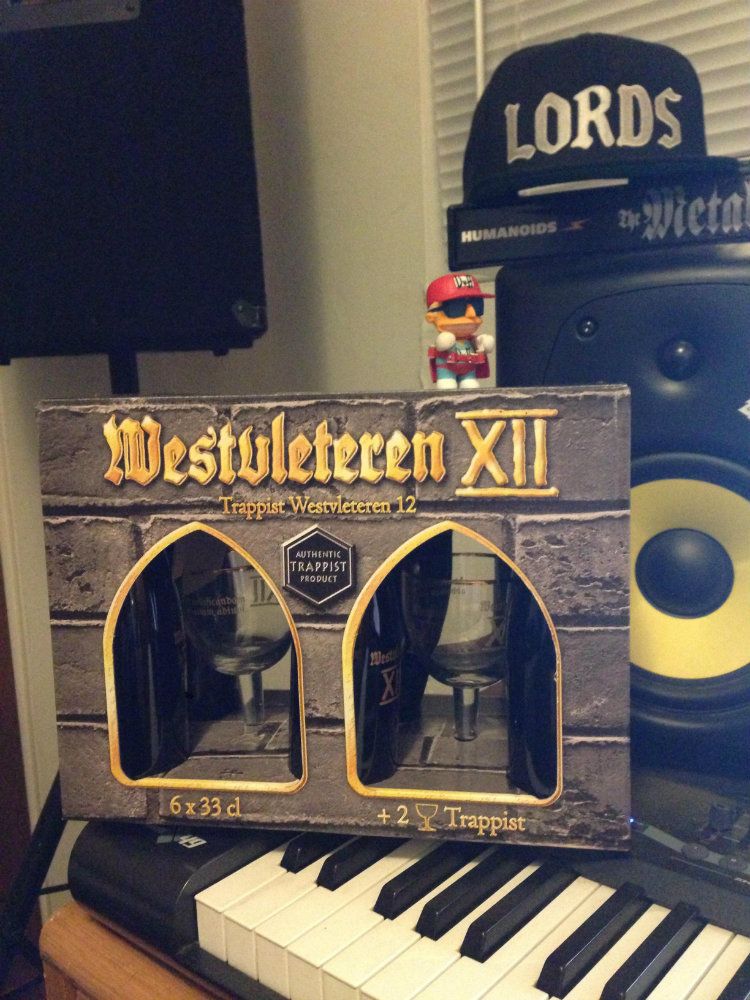
The 12th day of the 12th month of 2012 is not a day of deliverance but of delivery for devout American fans of Westvleteren 12, brewed by the reclusive Belgian monks at St. Sixtus Abbey.
The celebrated beer — often called the best in the world — is usually only available for sale at the abbey, located in the Belgian countryside. But starting Wednesday, buyers in the U.S. and other countries can purchase the beer at select retailers for $84.99 for six bottles.
Why this sudden blessing for beer lovers? The abbey happened to need an expensive renovation recently. But its 21 monks live an austere life — which means, among other things, that they purposely lack cash reserves. So the monks reluctantly made the decision to export small amounts of the precious nectar overseas for the first time.
And, says Mark Bode, the longtime spokesman for the Westvleteren Brewery, "I think it will be the last." Bode is one of very few people privy to the monks' views, as no visitors are allowed inside the abbey.
"They say, 'We are monks, we don't want to be too commercial. We needed some money to help us buy the new abbey and that's it,' " Bode explains. "Back to normal again."
At the abbey in western Belgium's countryside, "normal" entails a life entirely focused on prayer. The monks rise at 3 a.m. to start the first of seven prayer sessions per day. In between, they busy themselves in the kitchen and the garden, and with tasks like painting — and brewing.
The monks have brewed the same amount of beer every year since 1945 — about 3,800 U.S. barrels, just the amount needed to sustain the abbey. Sales of the beer are tightly controlled.
The resulting scarcity created demand on a regional scale, even before beer websites started an international craze by giving Westvleteren's beers a stellar taste rating.
In the brewery's cafe, beer connoisseur Andrew Stroehlein, who has blogged his way through an estimated 500 Belgian varieties, says he went through, well, hell and high water to get some Westvleteren.
"You call the number over a series of days, weeks, months and nobody answers," he says, recounting how he tried to contact the abbey's beer shop. "Then finally somebody does answer. They tell you when you can come; they tell you what beer you can buy; they tell you how much you're gonna pay. And if you don't like it, then God be with you."
Nevertheless, Stroehlein has eagerly made a second trip on this day to get a taste of the Trappist treat, more than two hours' drive from Brussels deep into Flemish pig-farm country, suitably hard to find at the end of a long, narrow street.
"It's the holy grail of so many beer connoisseurs," he says. "This is where they want to reach. This is it."
Sitting nearby in the brewery's cafe are two patrons who came by train from the Netherlands.
"Because of the whole story, it's worth traveling for ... it's a legend," says John Stienen.
"But even without the whole story, if you take your time and pay attention to it, then you notice the difference," says Theijs van Welij. "And you really think, this is really one of the few quality beers that you should have tried in your life."
Back in Brussels, Stroehlein delivers a bottle of Westvleteren to Christine Frazer, who has been anticipating this first sip for a long time.
"That's lovely," she says, after sampling the brew. She adds with a smile, "It's like a sweetie, like a bonbon. Oh, yes!"
When there is criticism of Westvleteren's taste, it tends to be that it's overly sweet.
Jean Hummler owns one of the most successful lambic pubs in Brussels. The acidic lambic beers require more complex brewing processes — and, Hummler suggests, more sophisticated palates — than Trappist ales such as Westvleteren.
"It doesn't contain any special malt, with a lot of candy sugar. As professionals, we consider Westvleteren as a heavy, dark sweet beer," he says. "It's easy to be famous and popular when you're working on the mild and sweet side."
That criticism wouldn't bother the modest monks at St. Sixtus. Bode says that while they're proud of their product, the hype makes it more difficult to live a life of silence and seclusion.
"They don't want the publicity. They don't need it," he says.
But, he is reminded, that kind of notoriety can come in handy when you need a new roof. "One time in a lifetime, yes," he says, with a laugh.
got mine this morning, duffman approved.alphacat wrote:Whoa...
I totally want to try this now.
npr.org wrote:
A Sign From Above? Needing New Roof, Monks Sell Rare Beer In U.S.
The 12th day of the 12th month of 2012 is not a day of deliverance but of delivery for devout American fans of Westvleteren 12, brewed by the reclusive Belgian monks at St. Sixtus Abbey.
The celebrated beer — often called the best in the world — is usually only available for sale at the abbey, located in the Belgian countryside. But starting Wednesday, buyers in the U.S. and other countries can purchase the beer at select retailers for $84.99 for six bottles.
Why this sudden blessing for beer lovers? The abbey happened to need an expensive renovation recently. But its 21 monks live an austere life — which means, among other things, that they purposely lack cash reserves. So the monks reluctantly made the decision to export small amounts of the precious nectar overseas for the first time.
And, says Mark Bode, the longtime spokesman for the Westvleteren Brewery, "I think it will be the last." Bode is one of very few people privy to the monks' views, as no visitors are allowed inside the abbey.
"They say, 'We are monks, we don't want to be too commercial. We needed some money to help us buy the new abbey and that's it,' " Bode explains. "Back to normal again."
At the abbey in western Belgium's countryside, "normal" entails a life entirely focused on prayer. The monks rise at 3 a.m. to start the first of seven prayer sessions per day. In between, they busy themselves in the kitchen and the garden, and with tasks like painting — and brewing.
The monks have brewed the same amount of beer every year since 1945 — about 3,800 U.S. barrels, just the amount needed to sustain the abbey. Sales of the beer are tightly controlled.
The resulting scarcity created demand on a regional scale, even before beer websites started an international craze by giving Westvleteren's beers a stellar taste rating.
In the brewery's cafe, beer connoisseur Andrew Stroehlein, who has blogged his way through an estimated 500 Belgian varieties, says he went through, well, hell and high water to get some Westvleteren.
"You call the number over a series of days, weeks, months and nobody answers," he says, recounting how he tried to contact the abbey's beer shop. "Then finally somebody does answer. They tell you when you can come; they tell you what beer you can buy; they tell you how much you're gonna pay. And if you don't like it, then God be with you."
Nevertheless, Stroehlein has eagerly made a second trip on this day to get a taste of the Trappist treat, more than two hours' drive from Brussels deep into Flemish pig-farm country, suitably hard to find at the end of a long, narrow street.
"It's the holy grail of so many beer connoisseurs," he says. "This is where they want to reach. This is it."
Sitting nearby in the brewery's cafe are two patrons who came by train from the Netherlands.
"Because of the whole story, it's worth traveling for ... it's a legend," says John Stienen.
"But even without the whole story, if you take your time and pay attention to it, then you notice the difference," says Theijs van Welij. "And you really think, this is really one of the few quality beers that you should have tried in your life."
Back in Brussels, Stroehlein delivers a bottle of Westvleteren to Christine Frazer, who has been anticipating this first sip for a long time.
"That's lovely," she says, after sampling the brew. She adds with a smile, "It's like a sweetie, like a bonbon. Oh, yes!"
When there is criticism of Westvleteren's taste, it tends to be that it's overly sweet.
Jean Hummler owns one of the most successful lambic pubs in Brussels. The acidic lambic beers require more complex brewing processes — and, Hummler suggests, more sophisticated palates — than Trappist ales such as Westvleteren.
"It doesn't contain any special malt, with a lot of candy sugar. As professionals, we consider Westvleteren as a heavy, dark sweet beer," he says. "It's easy to be famous and popular when you're working on the mild and sweet side."
That criticism wouldn't bother the modest monks at St. Sixtus. Bode says that while they're proud of their product, the hype makes it more difficult to live a life of silence and seclusion.
"They don't want the publicity. They don't need it," he says.
But, he is reminded, that kind of notoriety can come in handy when you need a new roof. "One time in a lifetime, yes," he says, with a laugh.

you are thinking of unibroue's maudite.ninjadog wrote:This shit is unique because it's fermented in the bottle, which is why it has the champagne style cork, but also has a bit of sediment in the bottom. It used to have a sweet label with some guys paddling a canoe off the earth with a big fuckin Satan in the background. It means end of the earth too. It's 9% and isint expensive.
http://www.unibroue.com/en/beers/15/

The word “Maudite” refers here to the Legend of “Chasse-Galerie” a tribute to the early lumberjacks of Nouvelle-France. The legend tells of eight daring woodsmen who, during winter, yearned to be home for the Holidays. They conjured up the Devil and all of them pledged their soul in return for flying them in their canoe to their village. As they sailed across the moonlit sky, one of them managed to free himself from the pledge by invoking the name of God, which caused the flying canoe to come crashing down to earth.


